Article by B.Jayalakshmi
Article Developed by: Bathula Jayalakshmi
MBA(Media Management)
Sri Padmavati Mahila Visvavidhyalayam, Tirupati.
Article: From Purpose-Washing to Impact-Reporting
Moving Beyond Mission Statements to Measurable ESG Results
Introduction
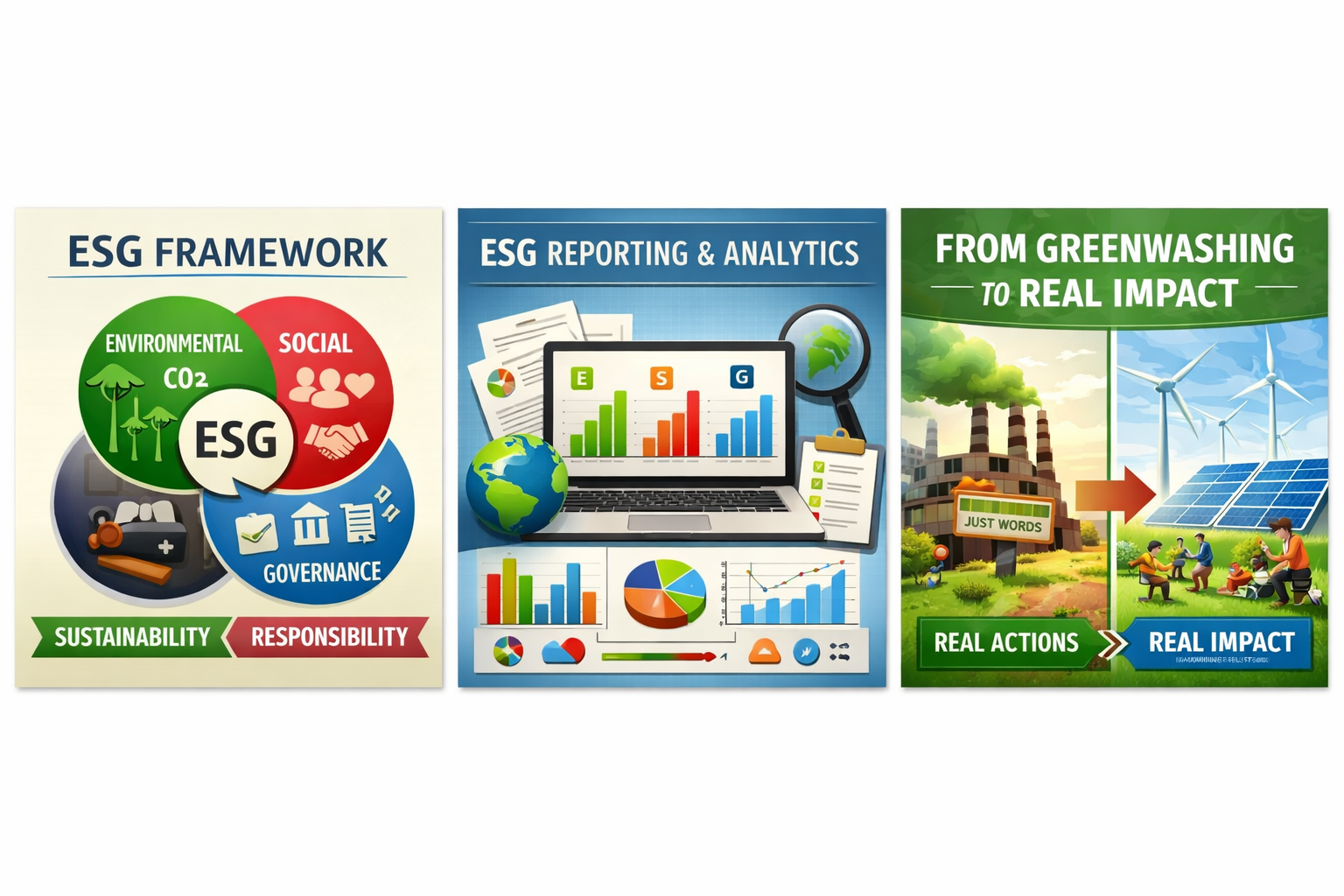
In recent years, businesses across the globe have embraced ESG (Environmental, Social, and Governance) principles, presenting themselves as purpose-driven and socially responsible. However, a growing gap has emerged between what companies say and what they actually do. This gap is often described as purpose-washing—a practice where organizations promote grand mission statements without embedding them into real business actions.
To build trust and create genuine value, companies must transition from symbolic commitments to impact-reporting, where ESG performance is measurable, transparent, and verifiable.
What is Purpose-Washing?
Purpose-washing refers to the inauthentic communication of a company’s social or environmental purpose without aligning it with core operations or decision-making.
Typical signs include:
Vague sustainability promises
Overuse of buzzwords like “green” or “ethical”
Lack of measurable goals
No clear link between purpose and business strategy
This creates a “purpose-to-action gap”, reducing stakeholder trust and damaging credibility.
The Rise of Impact-Washing in ESG
Closely related is impact-washing, where companies exaggerate or selectively disclose positive ESG outcomes while hiding negative impacts.
Key Problems:
Misleading claims and selective data reporting
Lack of transparency and standardized metrics
Misallocation of investments toward ineffective initiatives
Why Impact-Reporting Matters
Impact-reporting shifts the focus from storytelling to evidence-based performance. Instead of asking “What is our purpose?”, companies must answer:
“What measurable impact are we creating?”
Benefits:
Builds credibility and investor confidence
Enables data-driven decision-making
Aligns ESG with long-term business strategy
Drives real environmental and social change
Key Elements of Effective Impact-Reporting
1. Measurable ESG Metrics
Organizations must define clear KPIs such as:
Carbon emissions reduction (%)
Water usage efficiency
Employee diversity ratios
Community impact indicators
2. Standardization
Using frameworks like GRI, SASB, or ISSB ensures comparability and reduces manipulation.
3. Transparency & Full Disclosure
Companies must report both positive and negative impacts, avoiding selective storytelling.
4. Third-Party Verification
Independent audits improve credibility and reduce the risk of misleading claims.
5. Integration into Core Strategy
Impact should not be a side initiative—it must be embedded into operations, supply chains, and governance.
Challenges in Transition
Despite its importance, moving to impact-reporting is not easy:
Difficulty in measuring social impact
Lack of universal ESG standards
High cost of data collection and auditing
Risk of “metric manipulation”
However, overcoming these barriers is essential to ensure ESG delivers real-world benefits.
Conclusion
The future of ESG lies in accountability, not aspiration. Purpose alone is no longer enough—organizations must demonstrate measurable impact backed by credible data.
Transitioning from purpose-washing to impact-reporting is not just a compliance exercise; it is a strategic necessity for businesses that aim to remain relevant, responsible, and resilient in a rapidly evolving world.