🧠 The Psycholo-WPS Office
🧠 The Psychology of Comfort Branding.
How brands are winning by reducing “decision fatigue” in an uncertain world
1. Introduction
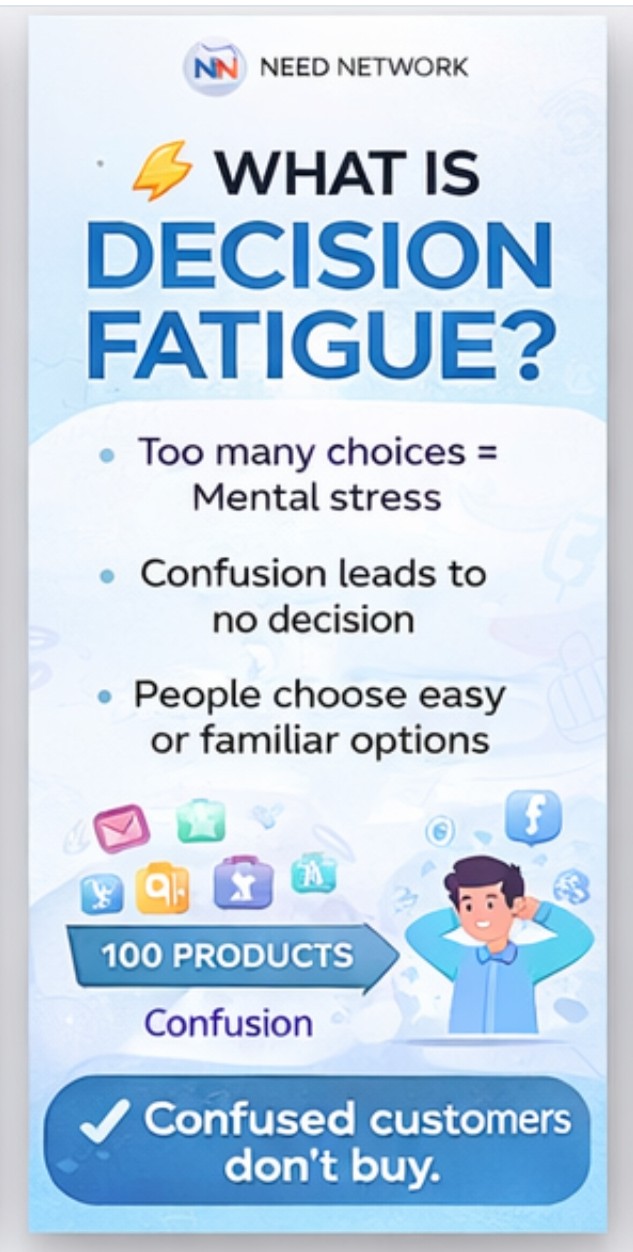
In today’s fast-moving and uncertain world, consumers are constantly making decisions—what to buy, what to watch, what to eat, and more. This overload leads to Decision Fatigue, where people feel mentally exhausted from too many choices.
To solve this, brands are now focusing on comfort branding—a strategy that makes decision-making easier, faster, and emotionally satisfying for customers.
2. What is Comfort Branding?
Comfort branding is a marketing approach where brands:
•Reduce complexity
•Create emotional safety
•Build trust and familiarity
Instead of overwhelming customers, brands simplify choices and create a feeling of “this is easy and safe to choose.”
3. Understanding Decision Fatigue
Decision fatigue happens when:
•Consumers face too many options
•Information is confusing or overwhelming
•Choices feel risky
Effects:
•People delay decisions
•Choose default or familiar brands
•Avoid buying altogether
👉 Example: When you see 50 similar products online, you either:
Pick the most familiar brand
Choose the “recommended” option or exit without buying
4. Why Comfort Branding is Important Today
•Modern consumers:
•Are stressed and time-poor
•Face economic and social uncertainty
•Prefer simplicity and clarity
So, brands that reduce mental effort win more customers.
5. Key Strategies of Comfort Branding
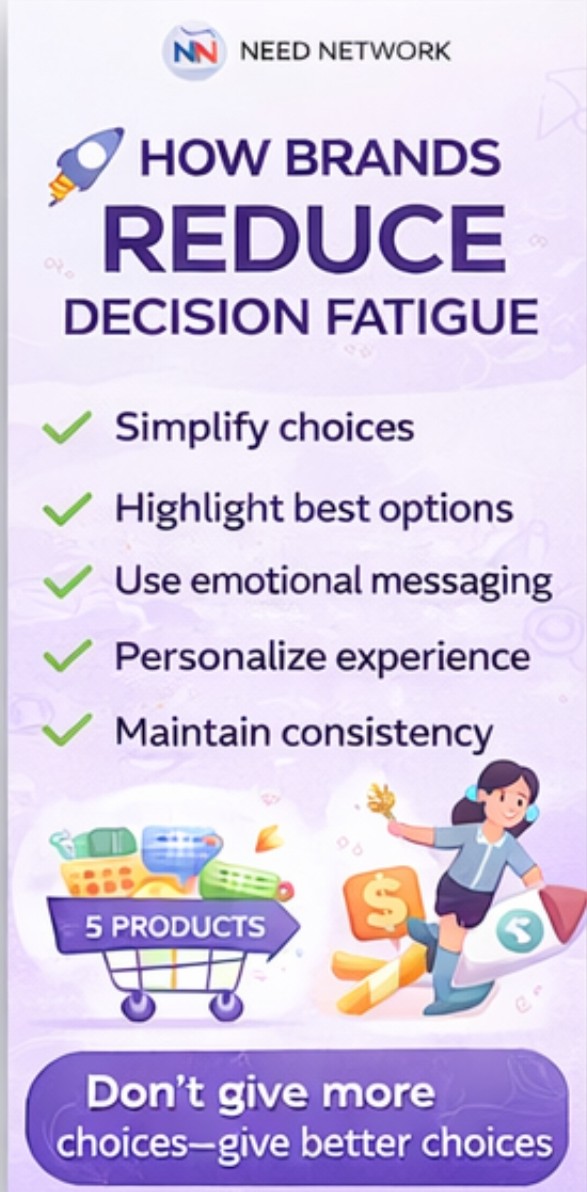
1. Simplifying Choices
Limited product options
•Clear categories
•Easy navigation
👉 Example: Showing “Top Picks” or “Best Seller”
2. Building Familiarity
•Consistent colors, logos, messaging
•Repetitive brand identity
👉 This creates trust and reduces thinking effort.
3. Emotional Connection
•Warm messaging (care, safety, trust)
•Relatable storytelling
👉 Customers feel emotionally secure with the brand.
4. Personalization
•Showing relevant products
•Using past behavior
👉 Makes decisions quicker and easier.
5. Clear Communication
•Simple language
•No complicated jargon
•Straightforward benefits
👉 Reduces confusion and builds confidence.
6. Examples of Comfort Branding
🛒 E-commerce Platforms
“Recommended for you” sections
√Easy filters and sorting
🍔 Food Brands
Combo meals (reduces choice stress)
“Most popular” tags
📱 Digital Apps
One-click purchase
Saved preferences
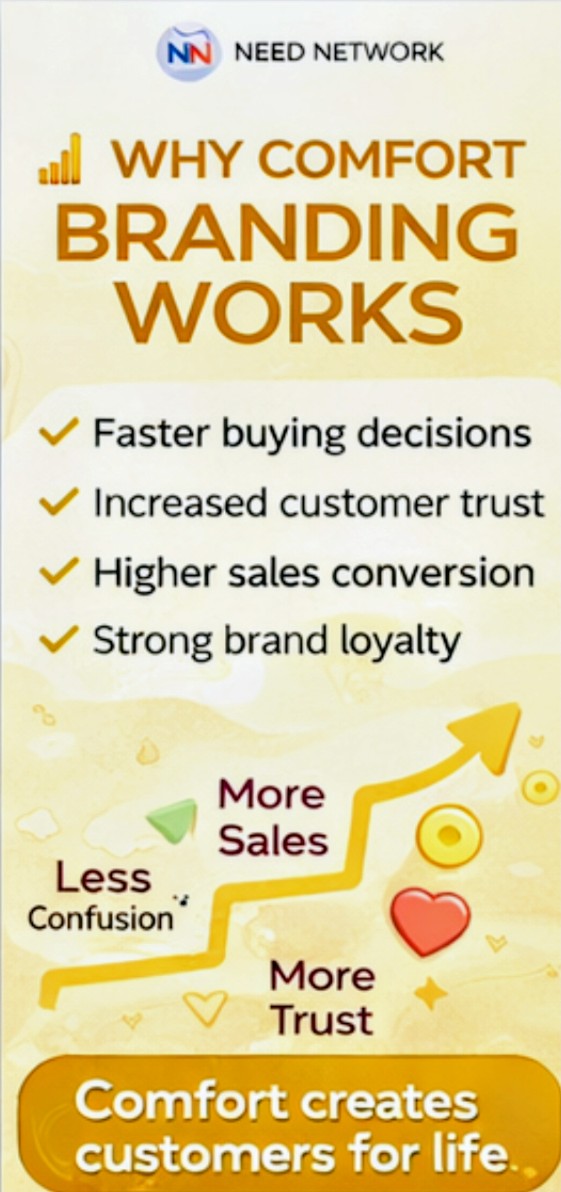
7. Benefits for Brands
✔ Higher Sales
Customers buy faster with less thinking.
✔ Customer Loyalty
People return to brands that feel easy and safe.
✔ Better User Experience
Smooth and stress-free interactions.
✔ Competitive Advantage
Brands that simplify stand out in crowded markets.
8. Challenges
•Too much simplification can reduce variety
•Over-personalization may feel intrusive
Brands must balance choice + simplicity
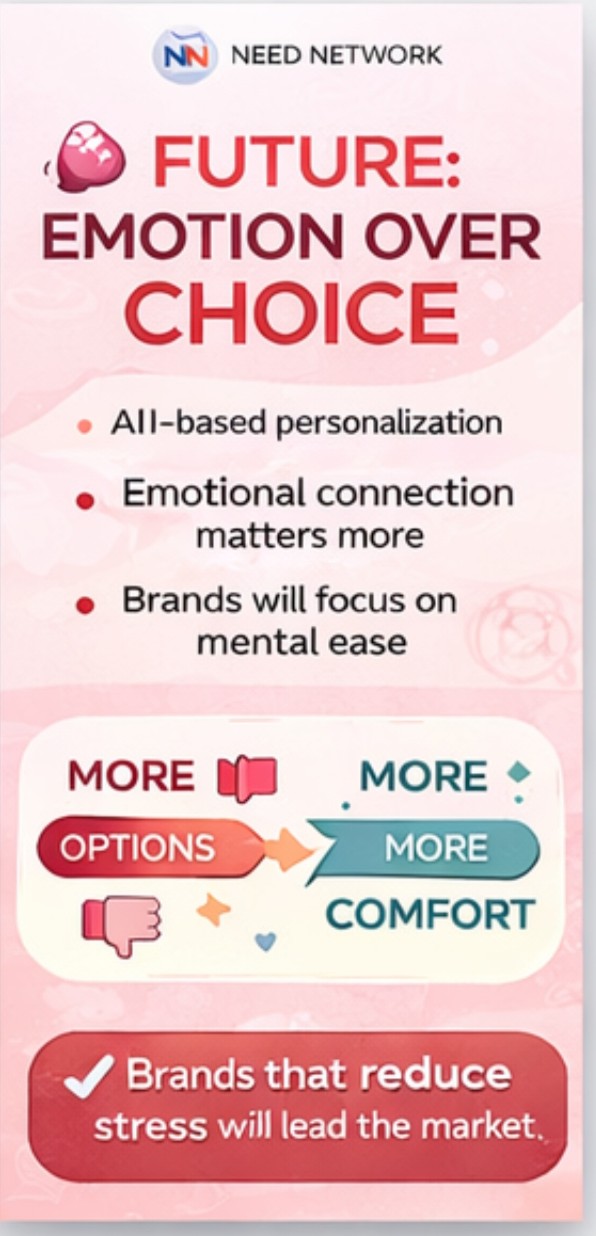
9. Future of Comfort Branding
In the future, brands will:
•Use AI for smarter personalization
•Focus more on emotional well-being
•Reduce digital overload
👉 Comfort branding will become a core marketing strategy, not just an option.
10. Conclusion
Comfort branding is not just about selling products—it’s about making life easier for consumers.
By reducing decision fatigue, brands create:
•Trust
•Emotional safety
•Faster decisions
In a world full of uncertainty, the easiest brand to choose often becomes the most successful.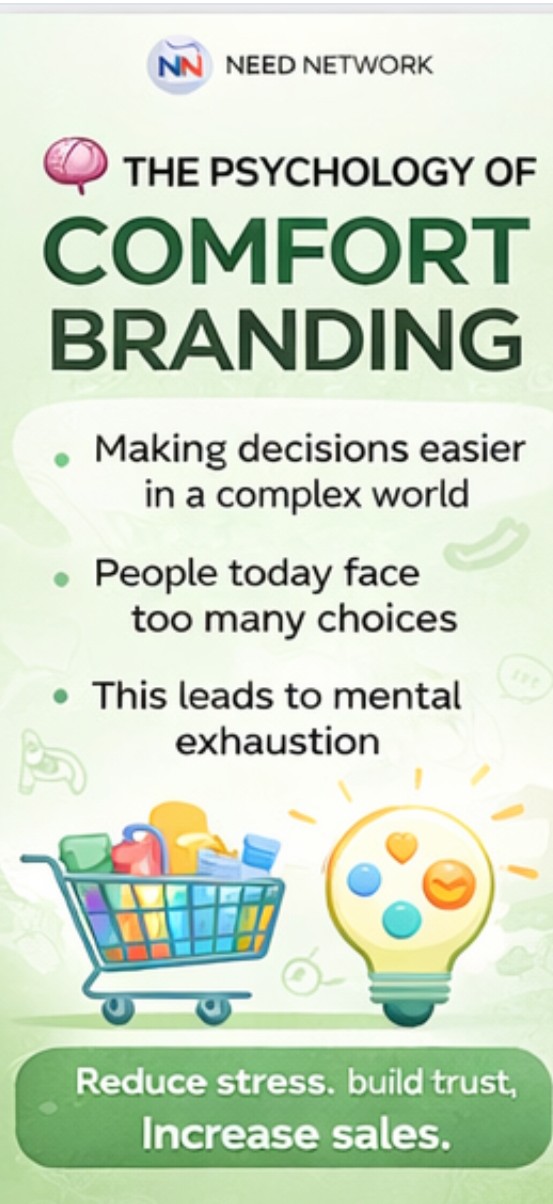
Article presented by Salivendra Sandhya
MMM(MBA) 2year
SPMVV
Tirupati.